
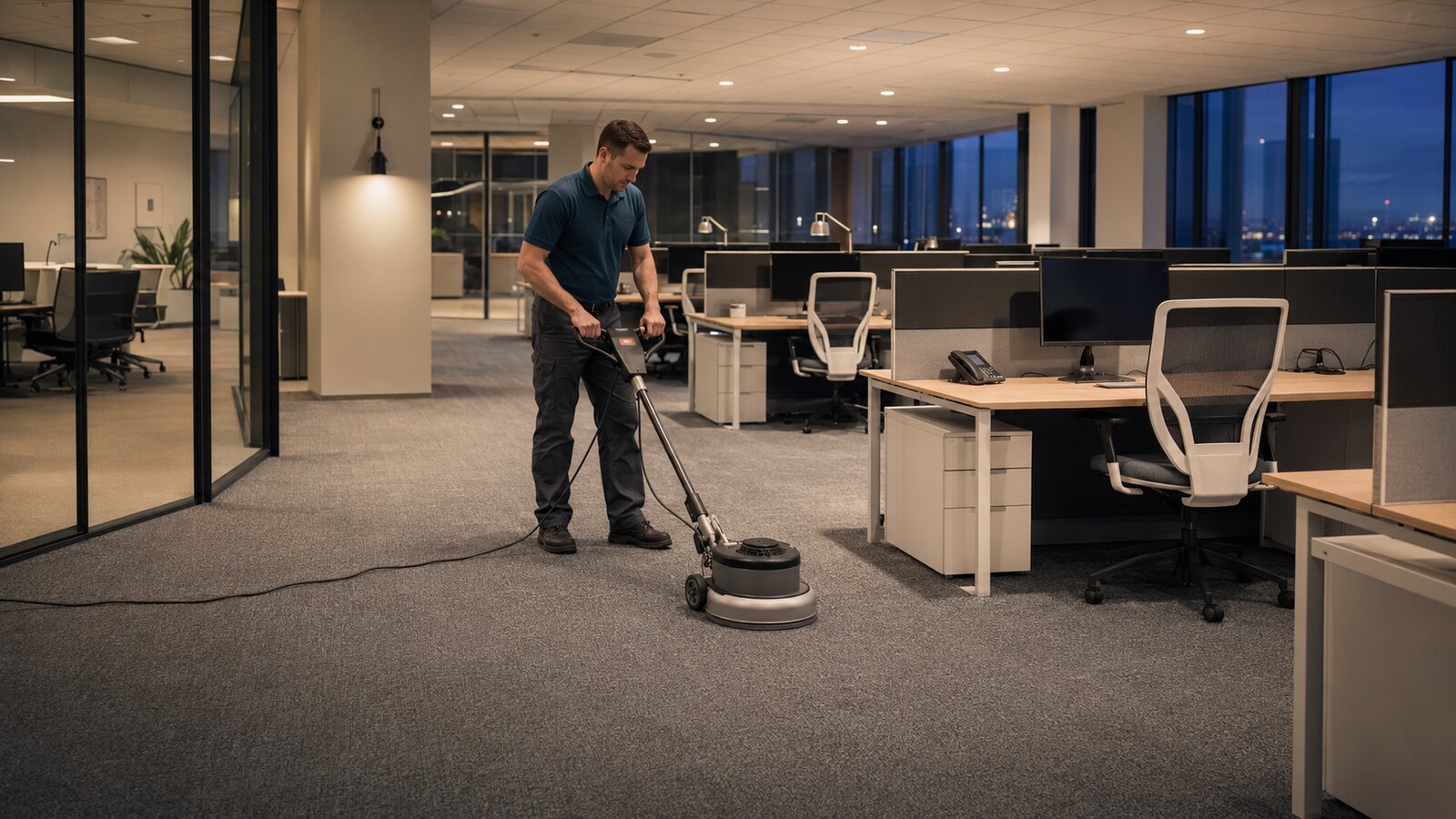
Office carpet cleaning is less about finding one “office” frequency and more about managing traffic, access, and different use zones without disrupting the workday. A reception area, elevator path, conference room, private office, and low-use storage area do not experience the same soil load, so they do not always need the same treatment at the same time.
We use low-moisture encapsulation as our primary office carpet-cleaning method. It can fit well into occupied offices because it introduces relatively little moisture and can be scheduled in phases or after normal business activity. As with every carpet-cleaning method, the installation and condition still need to be appropriate for the process.
What Office Carpet Cleaning Can Include
A defined office scope may include:
- reception and waiting areas;
- open work areas;
- private offices;
- hallways and paths between departments;
- conference and training rooms;
- elevator lobbies and common corridors;
- break-room approaches and other spill-prone transitions; and
- shared building areas coordinated by property management.
The proposal should say which areas are included. “Office carpet cleaning” can mean very different things in a 2,000-square-foot suite and a multi-floor building, so clear zoning prevents misunderstandings.
Start With Traffic Zones, Not One Calendar Rule
High-traffic areas usually show soil first. Entrances can receive tracked-in particulate soil, main corridors concentrate daily movement, and conference rooms can have periodic spikes in use. Private offices may remain presentable much longer.
A practical maintenance plan can therefore separate the office into zones:
| Zone | Typical planning question |
|---|---|
| Entrances and primary walk paths | Are these visibly soiling before the rest of the office? |
| Reception and client-facing areas | What appearance standard does the business need to maintain? |
| Conference and training rooms | Is use steady, event-driven, or intermittent? |
| Open work areas | Can cleaning be phased around teams or furniture? |
| Private offices | Do they need the same cadence as common areas? |
| Break-room approaches | Are isolated spills better handled with spot treatment between full services? |
This is why we may recommend high-traffic lane treatment between broader office cleanings rather than automatically increasing the frequency for the entire floor.
After-Hours and Weekend Planning
Office cleaning is often easier outside peak working hours, but “after hours” still requires planning. Building doors may lock automatically, elevators can switch modes, security staff may need notice, parking structures may close, and property managers may restrict contractor access to specific times.
Before scheduling, confirm:
- the earliest entry time and latest exit time;
- who provides building or suite access;
- alarm and security procedures;
- elevator or freight-elevator rules;
- loading and parking instructions;
- rooms that must stay available; and
- the time employees or tenants return.
Our after-hours carpet cleaning guide provides a fuller checklist.
What Needs to Move?
A productive scope distinguishes between items that can reasonably be moved and items that should stay in place.
Small chairs, lightweight tables, floor mats, waste bins, and similar items can often be relocated as arranged. Desks, cubicle systems, filing cabinets, electronics, built-in furniture, and heavy equipment generally remain in place unless moving is specifically discussed before the job.
Employees can help by clearing loose items, boxes, cables, and personal belongings from the floor. That reduces delays and makes the cleanable area clear before work starts.
Multi-Tenant Office Buildings
A multi-tenant property introduces two different cleaning needs: common areas controlled by building management and tenant suites controlled by individual occupants.
Property management may choose to clean lobbies, hallways, elevator areas, shared conference rooms, and other common spaces on a scheduled program while allowing tenants to add their suites separately. Another building may coordinate one larger service across multiple participating tenants.
Our Office Buildings industry page focuses on those facility-management decisions. This service page focuses on the carpet-cleaning scope itself.
Carpet Tile vs. Broadloom in Offices
Many offices use modular carpet tile, while others still use broadloom carpet. Both can be candidates for low-moisture maintenance, but the installation matters.
With carpet tile, seams, backing, adhesive, individual damaged tiles, and manufacturer instructions can affect the best approach. Broadloom installations can have different backing and seam considerations. See Carpet Tile Cleaning and Carpet Tile vs. Broadloom Cleaning if you know which system your office uses.
Spots, Coffee, Food, and Localized Problems
A single spill does not always justify cleaning the entire office. If the overall carpet is still in good condition, spot and stain treatment can address an isolated problem between planned services.
We do not guarantee that every stain will be removed. Results depend on the substance, fiber, age of the stain, previous treatment, and whether the discoloration is actually a stain rather than permanent fiber damage.
Building a Recurring Office Program
A recurring program is most useful when it is based on observed conditions. Instead of choosing “quarterly” because it sounds normal, start by asking how quickly each zone changes in appearance.
A plan might include more frequent attention for entrances and main paths, broader encapsulation service when the overall office needs it, and periodic review of whether certain areas require a different cleaning method. The schedule can be adjusted if occupancy, season, tenant mix, or use changes.
See Recurring Maintenance Programs and Carpet Maintenance Programs Explained.
What to Include in an Office Carpet Cleaning Quote Request
The fastest way to get to a realistic scope is to include:
- approximate carpeted square footage;
- number of floors, suites, or zones;
- whether the carpet is tile or broadloom, if known;
- the areas with the most visible traffic or staining;
- furniture and cubicle layout;
- building access and security requirements;
- preferred evenings, weekends, or other cleaning windows; and
- whether you want one-time work or a maintenance plan.
Photos of unusual stains, tight access, or heavily trafficked areas can also provide useful context.
Maintenance Guidance
The Carpet and Rug Institute's commercial maintenance guidance and CRI 204 support planned maintenance based on the installation and use conditions rather than one universal frequency. Manufacturer care guidance should also be considered when available.
If you are planning office carpet cleaning in San Diego County, request a quote and tell us how the office is used, when it can be accessed, and which areas are creating the maintenance problem. That gives us enough context to discuss a useful scope instead of treating every office the same.