
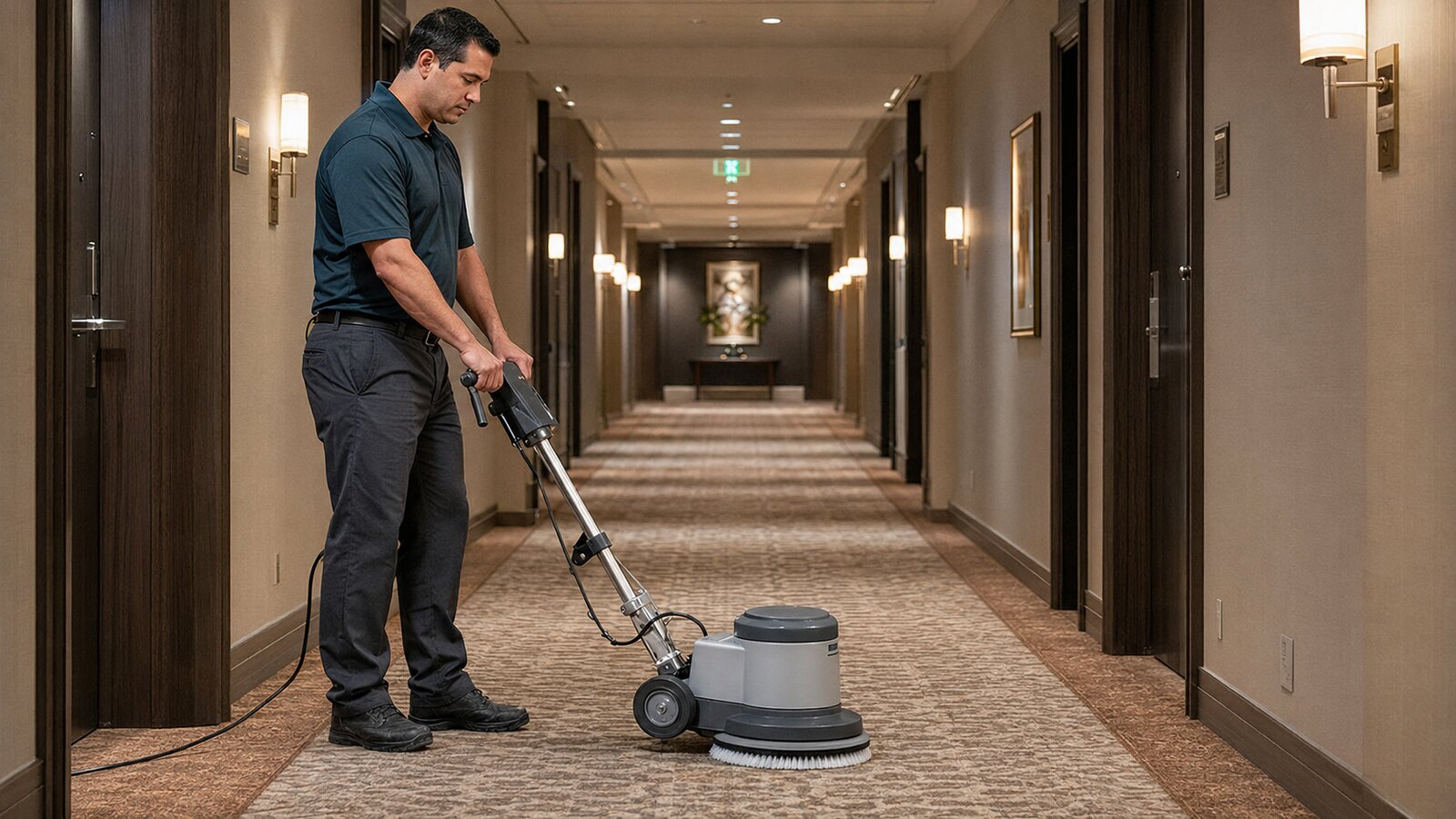
Hotel carpet cleaning has to fit a property that rarely stops operating. Guest rooms turn over, corridors stay in use, lobbies are visible all day, and meeting or banquet spaces can shift from empty to heavily occupied within hours. That makes zoning and scheduling as important as the cleaning method itself.
We use low-moisture encapsulation for compatible commercial carpet. For hospitality properties, the goal is to define a scope that can be completed around occupancy while keeping the limitations of the method clear.
Divide the Property Into Operational Zones
A hotel should not be treated as one carpeted area. A practical plan separates spaces such as:
- lobby and front-desk approaches;
- guest-room corridors;
- elevator lobbies;
- guest rooms;
- meeting and conference rooms;
- banquet or event spaces;
- administrative offices; and
- other carpeted public areas.
Each zone has a different traffic pattern and a different time when it can be released for service. High-visibility public areas may need more frequent appearance maintenance than lower-use rooms, while an event space may need attention after a specific booking rather than on the same cadence as a guest corridor.
Guest Rooms and Housekeeping Coordination
Guest-room carpet cleaning works best when room access is coordinated with housekeeping or whoever controls room status. The property can identify rooms that are vacant long enough for service and drying without creating a conflict with the next expected use.
Before the cleaning window, it helps to clarify whether movable chairs, luggage racks, bins, or other small items will be relocated by hotel staff or included in the agreed scope. Beds, built-ins, electronics, and other large or connected furnishings generally remain in place unless a different arrangement is made.
Corridors, Elevators, and Guest Movement
Corridors need special planning because they may be the only path between guest rooms, elevators, stairs, and exits. Cleaning can often be phased so that work moves through sections, but the property must maintain required access and safe circulation.
A good pre-service plan identifies:
- elevator and stair access;
- emergency egress that must remain clear;
- quiet-hour expectations;
- housekeeping carts and other operational traffic;
- the busiest guest movement periods; and
- areas that can be cleaned together without creating a bottleneck.
Lobbies and High-Visibility Areas
Lobby carpet can carry outside soil while also being one of the property's most visible surfaces. That makes it a good candidate for zone-based maintenance rather than waiting for every carpeted area to need cleaning at the same time.
If entrances, elevator approaches, or main walk paths change appearance faster than surrounding carpet, high-traffic lane treatment can be discussed between larger services.
Meeting and Event Spaces
Conference rooms, ballrooms, and event spaces can have concentrated use followed by short turnaround periods. Instead of promising a universal drying time, schedule backward from the next required use and account for the actual room condition, airflow, and setup needs.
Event teams should also flag food and beverage spills or isolated spots before service. Some of those may need spot and stain treatment in addition to the general cleaning scope.
Recurring Maintenance for Hospitality Properties
A recurring plan can give each zone its own cadence. The Carpet and Rug Institute's CRI 204 standard supports planned commercial carpet maintenance based on conditions rather than a single universal schedule.
That means a hotel can review lobby and corridor conditions more frequently, maintain guest rooms according to actual use and room-release opportunities, and schedule event spaces based on bookings. The plan can change with seasonality or occupancy rather than remaining fixed when operating conditions change.
See Carpet Maintenance Programs Explained for the planning framework.
When Encapsulation May Not Be the Right Answer
Low-moisture encapsulation is not a restorative cure-all. Carpet with heavy impacted soil, certain contamination issues, deep restorative needs, or manufacturer requirements may call for hot-water extraction or another process. We do not offer hot-water extraction.
Our encapsulation vs. hot-water extraction guide explains when a property should consider that distinction before booking a maintenance service.
What to Include in a Hotel Quote Request
To define a useful scope, provide the approximate carpeted square footage by area if possible, the number of rooms or corridors involved, known problem zones, room-access rules, preferred service windows, event or occupancy constraints, and whether you are considering a one-time service or recurring program.
For properties that need work outside normal guest-facing hours, use our after-hours carpet cleaning guide as a preparation checklist.
If you manage a hotel or hospitality property in our advertised San Diego County service area, request a quote with the operating constraints first. We can then discuss a cleaning scope that fits the property instead of forcing the property to fit a generic cleaning schedule.