
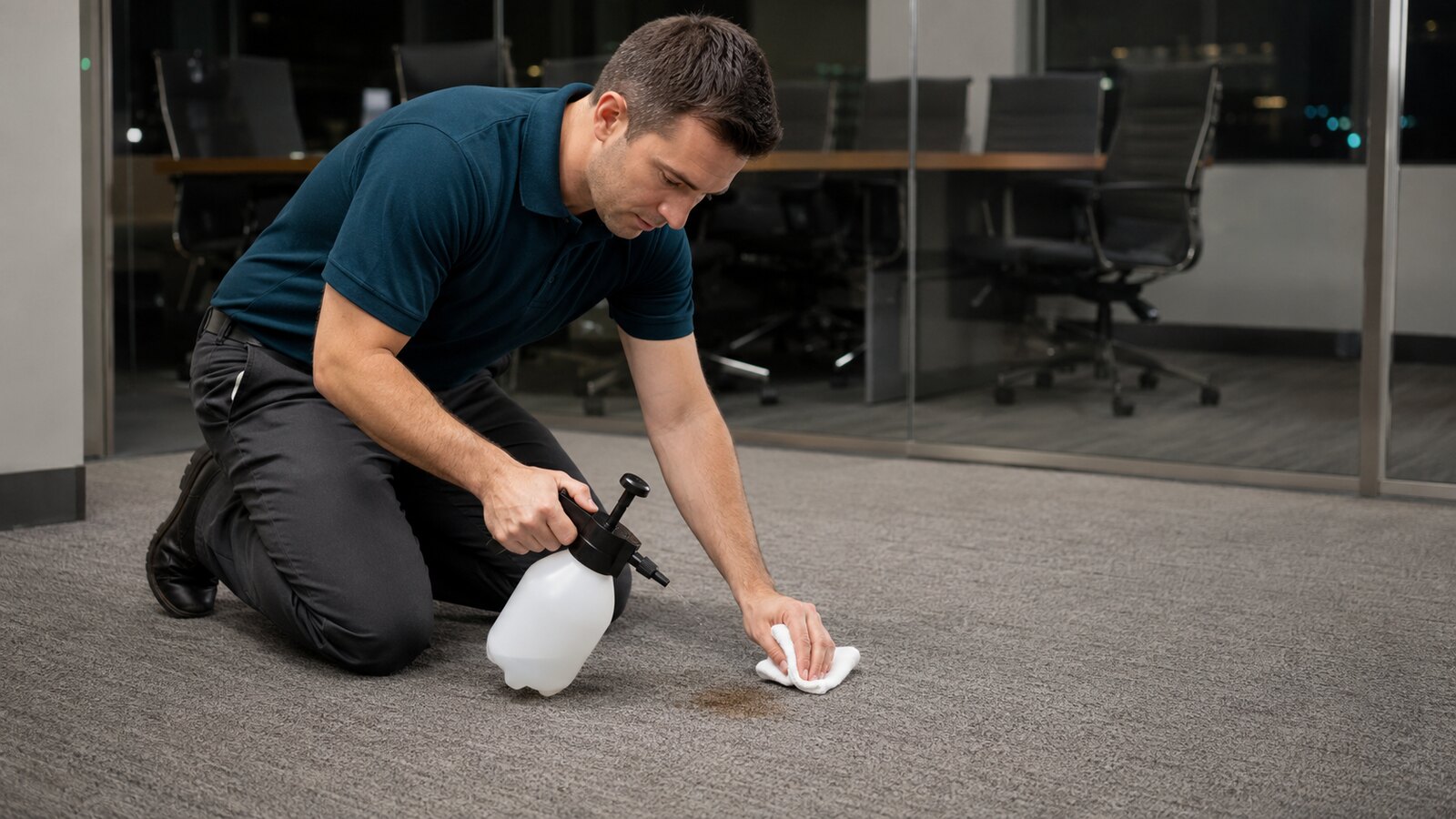
Spot and stain treatment is for localized problems. If one spill, mark, or small area is the issue and the rest of the carpet is still in acceptable condition, there may be no reason to clean an entire floor simply to address that one location.
The important limitation is equally simple: not every visible mark is removable soil. Some discoloration is permanent dye change, fiber damage, wear, residue from an earlier treatment, or a material problem that cleaning cannot reverse.
Start by Identifying What Happened
The best information to provide is:
- what spilled or caused the mark, if known;
- approximately when it happened;
- what has already been applied to the area;
- whether the carpet is tile or broadloom;
- whether the discoloration changed after drying; and
- whether the fiber feels different, stiff, damaged, or worn.
A photo taken in normal lighting can help establish the size and appearance of the problem before scheduling.
Spot, Stain, Damage, or Residue?
These terms are often used interchangeably, but the distinction affects expectations.
| What you see | What it may mean |
|---|---|
| Fresh localized spill | May respond to prompt, appropriate treatment. |
| Dark area that attracts soil again | Could involve sticky residue from the original spill or prior cleaner. |
| Lightened or bleached-looking area | May be permanent color loss rather than removable soil. |
| Crushed, frayed, or abraded fiber | Physical wear that cleaning cannot restore. |
| One severely damaged carpet tile | Replacement may be more practical if matching tile is available. |
| Broad soiling around the spot | A larger cleaning scope may be needed. |
We prefer to set realistic expectations before treatment rather than promise that every visible difference can be erased.
What Not to Do With an Unknown Stain
Commercial facilities often have multiple cleaning products on site. Applying several products in sequence can complicate the problem, leave residue, alter color, or create chemistry that is harder to evaluate later.
Aggressive scrubbing can also distort or damage carpet fiber. For a fresh spill, removing excess material and blotting without grinding the substance deeper into the pile is generally a safer starting principle than attacking it with whatever cleaner is closest.
If the spill involves a hazardous, biological, or otherwise unusual material, normal carpet spot treatment may not be the appropriate service. The facility should follow its safety procedures and use a qualified specialist where required.
When Targeted Treatment Makes Sense
Spot treatment is a good starting point when:
- the issue is limited to one or several small locations;
- the surrounding carpet still looks acceptable;
- there is no obvious physical damage;
- the carpet and chemistry are compatible; and
- the facility wants to handle the problem between scheduled broader cleanings.
For areas where soil follows a whole pathway rather than one isolated spot, High-Traffic Lane Treatment may be a better fit.
When a Full Cleaning Makes More Sense
If the entire room has a dull appearance, multiple lanes are affected, or spots are only one part of a broader soil problem, a full Commercial Carpet Cleaning scope may produce a more even result than treating a series of isolated areas.
This matters because cleaning one spot very aggressively while surrounding carpet remains uniformly soiled can sometimes make the treated area look different simply because it is cleaner than the rest.
Carpet Tile Gives You Another Option
With modular carpet tile, a permanently damaged tile can sometimes be replaced rather than repeatedly treated. Availability of matching stock, dye-lot differences, age, and installation method all matter, but the modular format can make localized replacement practical.
See Carpet Tile Cleaning for the cleaning-versus-replacement decision.
Spot Response as Part of a Maintenance Program
A recurring maintenance program works better when employees or facility staff know how to report spills between scheduled visits. A simple log can capture location, cause, date, and any immediate response. That helps identify recurring trouble spots and can also reveal whether certain areas need a different maintenance plan.
The Carpet and Rug Institute's commercial maintenance guidance treats spot and spill response as part of an overall carpet-care system rather than a substitute for regular maintenance.
What to Include in a Spot-Treatment Quote Request
Send the location, approximate size, what caused the spot if known, how long it has been present, what has already been tried, and a photo if possible. If there are multiple locations, note whether they share the same cause or are unrelated.
We will not promise complete stain removal from a photo alone. The goal is to decide whether targeted treatment is reasonable and what outcome is realistic.
If you have an isolated spot or stain on commercial carpet in our San Diego County service area, request a quote and describe the condition. If it looks more like physical damage or a broader cleaning problem, we can tell you before treating it as a simple spot.