
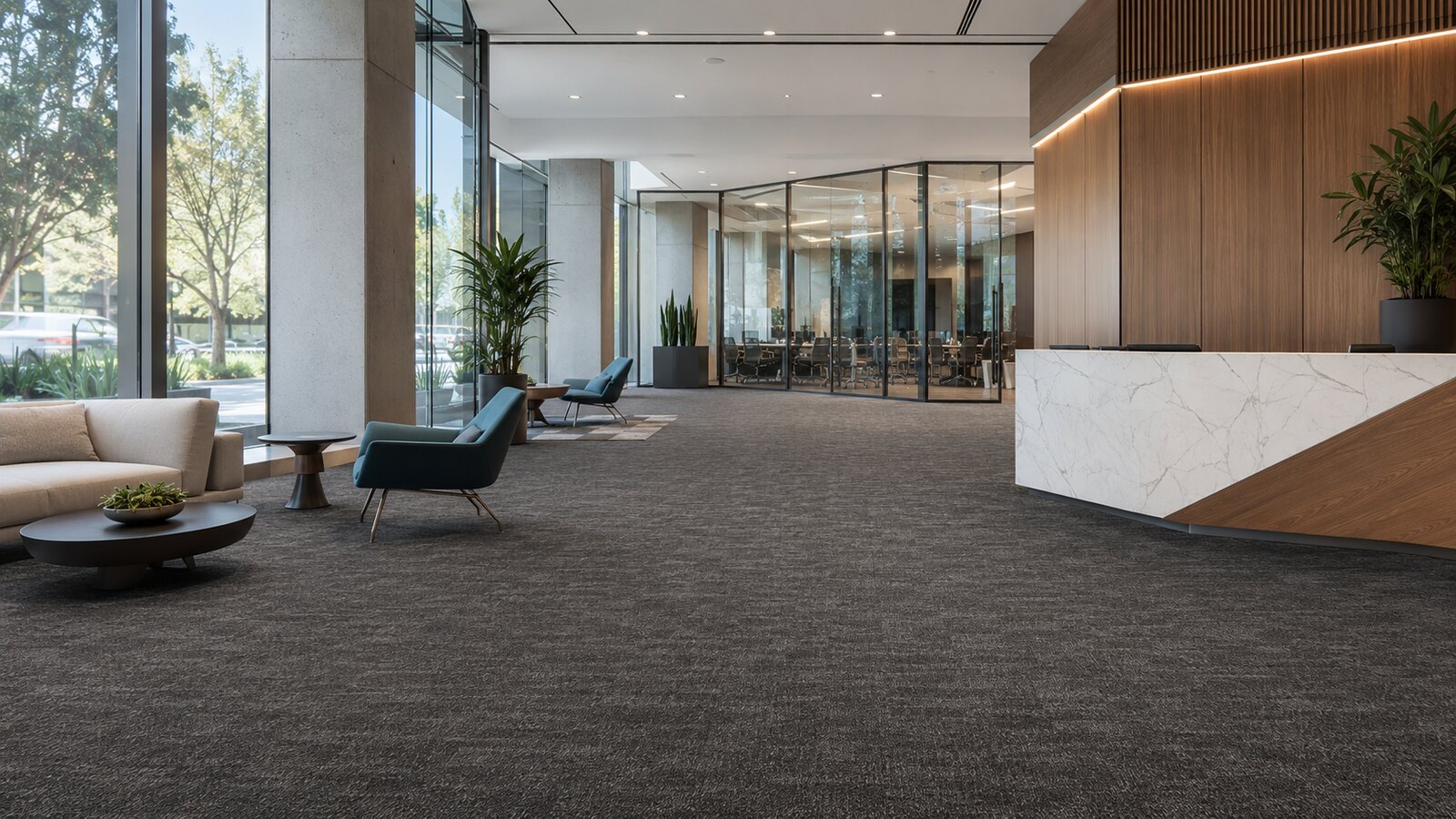
An office building is not simply a larger office. Property management may control the lobby and corridors while tenants control suites. Security and elevators can change after hours. Entrances can soil faster than upper-floor rooms. A useful carpet-maintenance plan has to account for those building systems before anyone starts cleaning.
Our Office Carpet Cleaning page explains the cleaning service itself. This page focuses on the facility-management decisions around that service.
Separate Common Areas From Tenant Space
For multi-tenant buildings, begin by identifying who controls each carpeted zone:
- main lobby and reception areas;
- elevator lobbies;
- common corridors;
- shared conference or amenity spaces;
- property-management offices;
- vacant suites; and
- occupied tenant suites.
A proposal should say whether it covers only common areas, only one tenant, or a coordinated group of spaces. This avoids assuming that building management has permission to enter every suite or that each tenant is included in a common-area agreement.
Build Maintenance Around Traffic Zones
The most visible areas of an office building often receive the most concentrated traffic. Main entrances, elevator approaches, shared corridors, and lobby paths can change appearance faster than interior rooms.
Instead of increasing cleaning frequency for every carpeted space, the building can use High-Traffic Lane Treatment in those zones while keeping lower-use spaces on a different cycle.
The Carpet and Rug Institute's CRI 204 commercial maintenance standard supports planned maintenance based on traffic and soil conditions rather than one universal schedule.
Coordinate Access Before the Cleaning Window
Office buildings can have access rules that become stricter after business hours. Before service, property management should confirm:
- contractor check-in procedure;
- keys, badges, or escort requirements;
- alarm instructions;
- freight or passenger elevator availability;
- parking and loading access;
- doors that automatically lock;
- areas that must remain open; and
- the deadline for returning each zone to normal use.
Our After-Hours Carpet Cleaning for Businesses guide turns those items into a planning checklist.
Vacant Suites and Tenant Turnover
A vacant suite can be easier to clean because furniture and occupancy constraints are reduced, but it may also reveal wear, permanent staining, damaged carpet tile, or other conditions that cleaning will not fix.
Before a turnover service, distinguish between soil that can be cleaned and material condition that may require repair or replacement. In modular carpet-tile offices, replacing isolated damaged tiles can sometimes be more rational than repeatedly treating them.
Maintenance Programs for Property Managers
A Recurring Maintenance Program can document each building's zones, frequencies, access notes, and problem areas. That is especially useful for property managers responsible for multiple locations.
The plan should be reviewed when occupancy, tenant mix, season, entrance traffic, or floor use changes. A static schedule should not outlive the conditions it was designed for.
Building Presentation Without Overclaiming Business Outcomes
Clean common-area carpet contributes to a maintained building appearance for employees, tenants, visitors, and prospects. We do not claim that carpet cleaning by itself causes lease renewals, higher rents, or other financial results. It is one facility-maintenance input among many.
That distinction matters because useful SEO content should help a property manager make a decision rather than attach unsupported business promises to a cleaning service.
When the Method Needs to Change
Low-moisture encapsulation can be a practical maintenance method for many office carpet installations. It is not a universal restorative process. Heavily impacted soil, manufacturer requirements, certain contamination issues, or physical carpet damage can call for hot-water extraction, specialty cleaning, repair, or replacement.
We do not offer hot-water extraction. See Encapsulation vs. Hot-Water Extraction for the comparison.
What to Include in an Office-Building Quote Request
For an office building, provide the approximate carpeted square footage by common area and suite if possible, number of floors, access rules, elevator requirements, furniture assumptions, main traffic zones, and preferred service windows. If tenants are participating separately, identify who authorizes each suite.
If you manage an office building in our San Diego County service area, request a quote with the facility-management details as well as the square footage. That is what lets the cleaning scope fit the building instead of treating it like a generic office.