
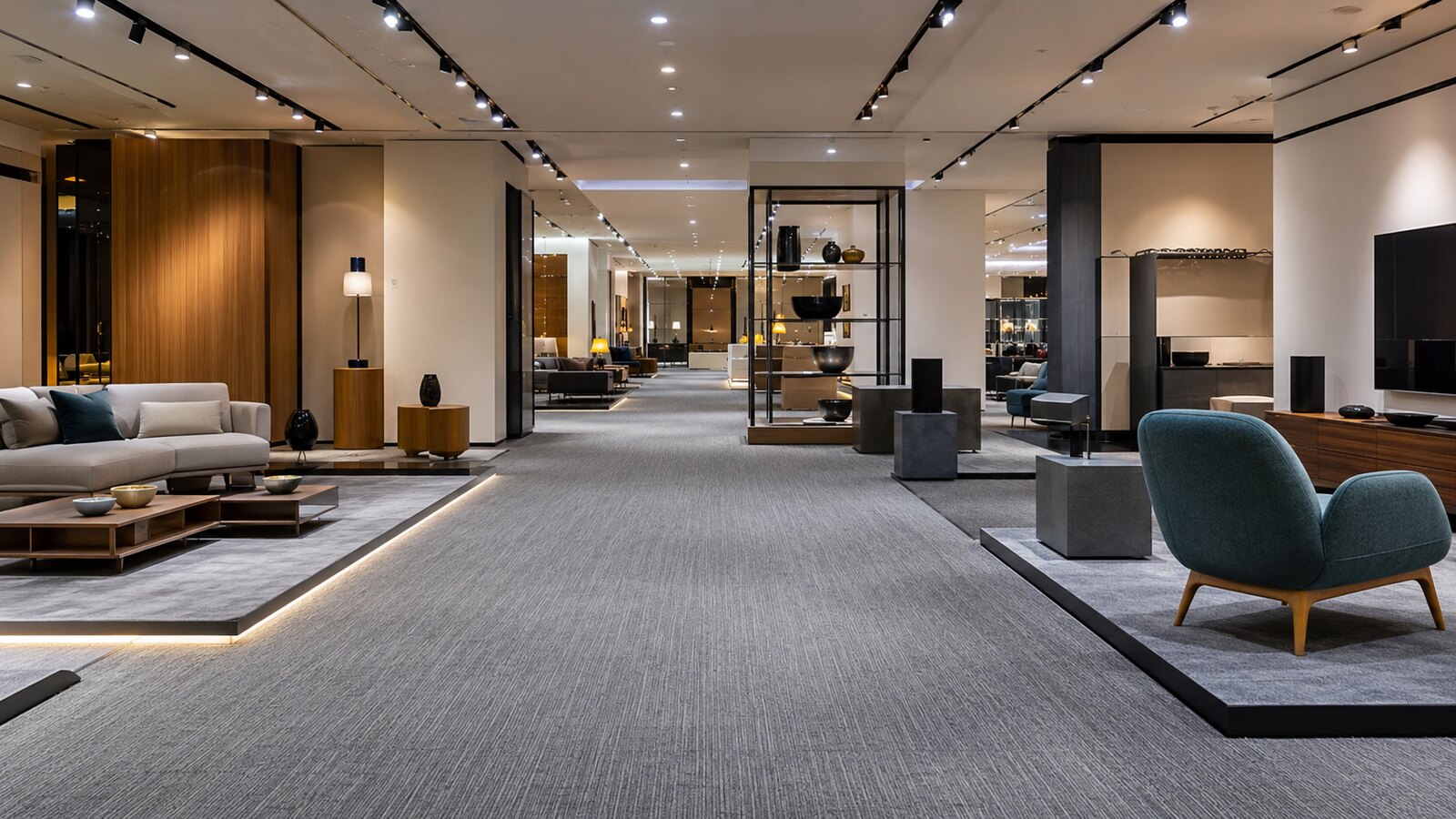
Retail stores and showrooms are customer-facing environments, but the cleaning decision is still a facility-maintenance decision. The useful questions are where traffic is concentrated, when the floor can be released, what merchandise or fixtures limit access, and whether the carpet itself is a good candidate for the proposed method.
Start With the Customer Traffic Map
A retail floor can have very different traffic levels across:
- exterior entrances and vestibule approaches;
- checkout or service-counter paths;
- main shopping aisles;
- display areas;
- fitting or consultation areas;
- back-office space; and
- lower-use perimeter zones.
Those differences can support a zone-based maintenance plan rather than cleaning every square foot at the same interval.
Entrances and Main Paths Usually Deserve Separate Attention
Tracked-in soil is concentrated at entries and then carried along primary traffic routes. Effective entrance matting and routine vacuuming are part of the maintenance system; professional cleaning does not replace them.
When the entry path changes appearance before the rest of the sales floor, High-Traffic Lane Treatment can focus on that area between broader services.
Plan Around Store Operations
The easiest window is often before opening or after closing, but retail operations can continue beyond customer hours. Stocking, deliveries, merchandising, cleaning, security, and staff meetings can all affect access.
Before scheduling, confirm:
- customer hours and actual staff occupancy;
- delivery or stocking activity;
- alarms and contractor access;
- displays or merchandise that cannot be moved;
- areas that must stay open; and
- the deadline for returning the sales floor to normal use.
Carpet Tile and Modular Showroom Floors
Some retail and showroom environments use carpet tile because individual sections can be replaced if they are damaged. Where tile is installed, cleaning should account for seams, backing, loose edges, and manufacturer instructions.
Carpet Tile Cleaning explains when low-moisture maintenance can make sense and when isolated tile replacement may be the better decision. Our Carpet Tile vs. Broadloom guide compares the installation differences.
Spills and Customer-Facing Spots
An isolated spill does not always require a full-floor cleaning. Spot and Stain Treatment can be used when the issue is localized and the surrounding carpet is still in acceptable condition.
We do not promise that every mark can be removed. Permanent color change, physical wear, damaged backing, burns, and other material problems are not fixed by cleaning.
Do Not Turn Appearance Into Unsupported Revenue Claims
A maintained sales floor can support the presentation standard a retailer chooses for its space. We do not claim that carpet cleaning directly increases sales, customer conversion, brand perception, or other financial outcomes. Those results depend on many factors outside a carpet-maintenance service.
What to Include in a Retail Quote Request
Provide the approximate carpeted square footage, store or showroom layout, customer and staff hours, main traffic paths, flooring type if known, display or merchandise constraints, isolated spots, and preferred cleaning window.
If you operate a retail or showroom property in our San Diego County service area, request a quote with the floor-use details. We can then plan the carpet service around the way the store actually operates.