
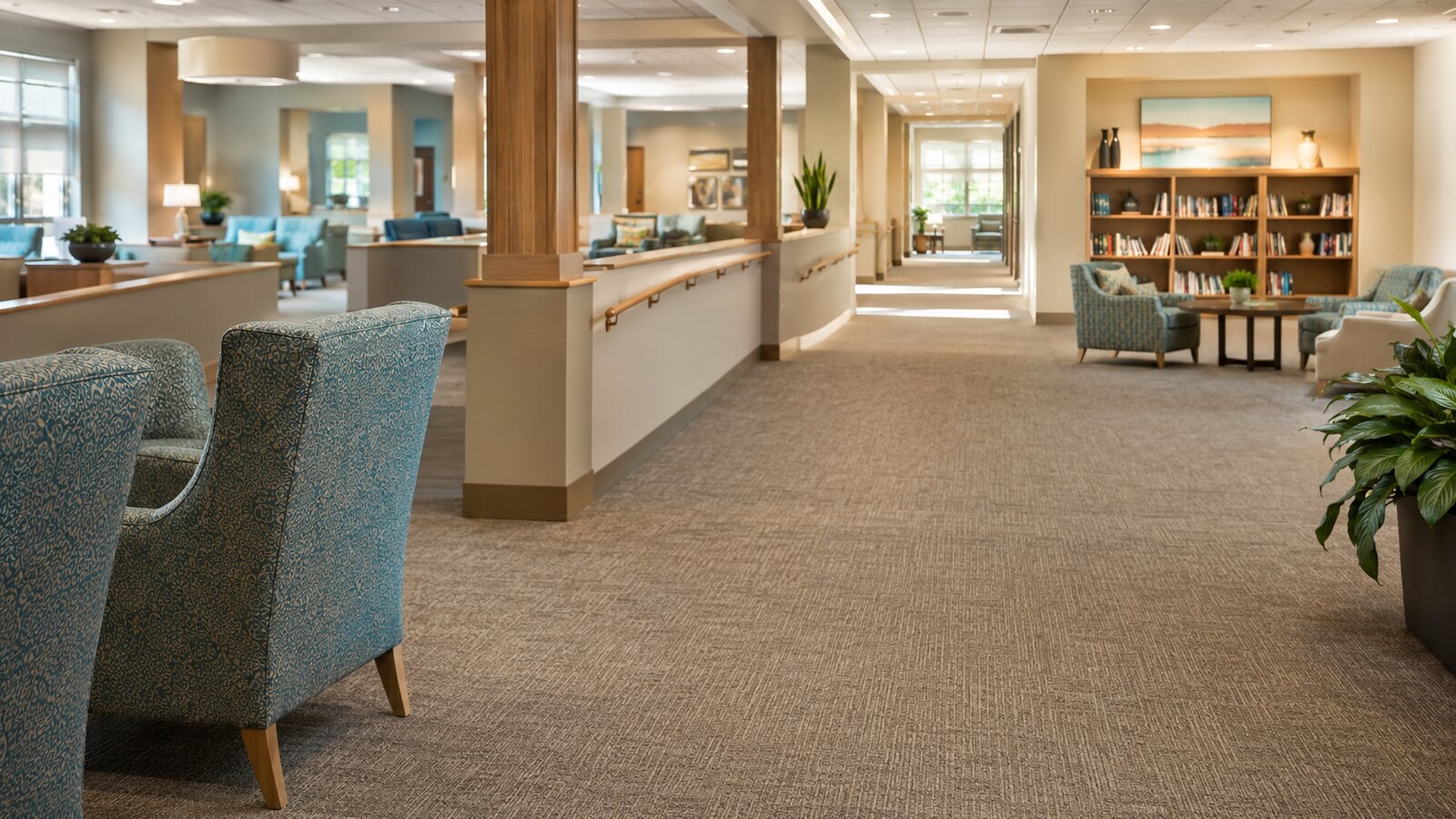
Senior-living and assisted-living properties are occupied environments where residents may rely on predictable routes, mobility devices, meal schedules, activities, and staff support throughout the day. Carpet maintenance needs to fit around those routines instead of treating the facility like an empty commercial building.
Our scope is compatible commercial carpet in common and business areas. It is not a clinical sanitation or infection-control service.
Plan the Facility by Zones
A senior-living property can separate carpeted areas such as:
- main lobby and reception;
- resident corridors;
- elevator lobbies;
- lounges and common rooms;
- compatible carpeted dining approaches;
- administrative offices; and
- other shared carpeted spaces.
Working in smaller zones can help preserve access while one area is being serviced.
Resident Circulation Comes First
Before scheduling, facility staff should identify required routes, residents who may need mobility accommodations, elevator dependencies, quiet periods, meal times, activities, visiting hours, and any areas that cannot be interrupted.
A cleaning plan should not create unnecessary barriers or assume residents can simply avoid a corridor without an alternate route.
Corridors and Common Areas May Soil Faster
Main corridors, lobby paths, and shared spaces often receive more traffic than lower-use offices. High-Traffic Lane Treatment can be used when the problem is concentrated, while a Recurring Maintenance Program can assign different frequencies by zone.
The schedule should be reviewed as occupancy, programs, or traffic patterns change rather than treated as permanent.
Spots and Dining-Adjacent Areas
Common rooms and dining-adjacent carpet can develop isolated food or beverage spots. Spot and Stain Treatment may be useful between broader services when the surrounding carpet is still in acceptable condition.
We do not guarantee that every discoloration can be removed. Permanent dye change, fiber wear, physical damage, and backing failure are not corrected by cleaning.
Avoid Healthcare Claims
A maintained carpeted common area contributes to the facility's chosen appearance standard, but ordinary carpet cleaning should not be marketed as preventing disease, reducing falls, satisfying healthcare regulations, or providing infection control.
If a spill or area involves biological contamination, regulated medical waste, or a specialty sanitation requirement, the facility should use the appropriate qualified protocol rather than an ordinary carpet-maintenance scope.
Staff Coordination Matters More Than a Generic Time Slot
The best cleaning window may be different for each building or wing. Facility staff know when residents are at meals, activities, appointments, or other locations and can identify periods when a specific corridor or lounge can be serviced with the least disruption.
The quote should also identify who can provide access and who has authority to approve changes if conditions on site differ from the original scope.
What to Include in a Senior-Living Quote Request
Provide the approximate carpeted square footage, areas included, resident circulation constraints, elevator and access requirements, meal and activity schedules, main traffic or stain zones, and the preferred service window.
If you manage a senior-living property in our San Diego County service area, request a quote with the resident and circulation requirements first. We can then discuss a carpet-maintenance scope that fits the facility without claiming services outside ordinary commercial carpet care.