
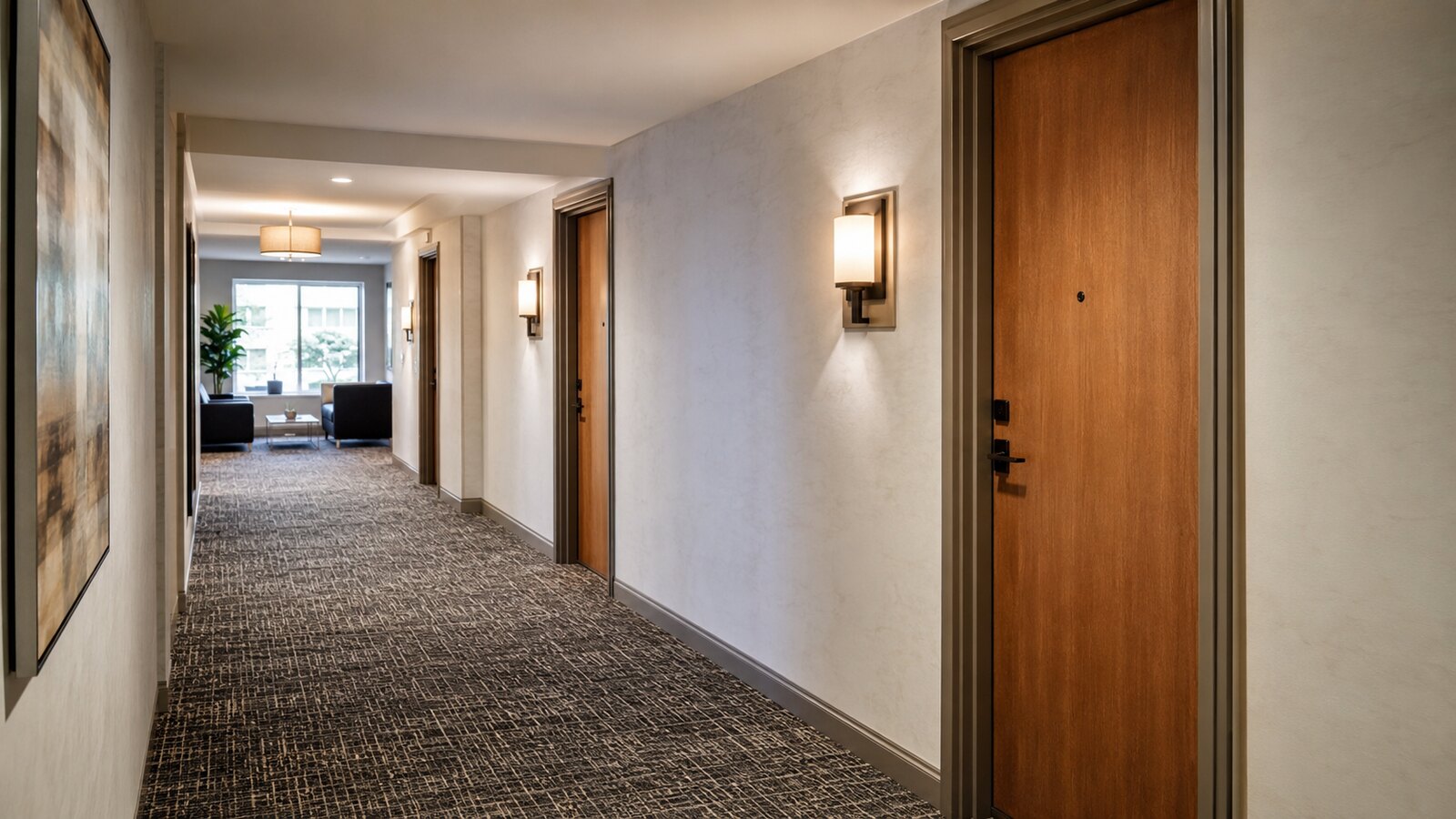
Apartment and multifamily properties are occupied environments. Residents still need hallways, elevators, lobbies, mail areas, leasing offices, and amenity spaces while maintenance is happening. That means common-area carpet cleaning has to be planned around circulation and property operations, not simply around square footage.
Define Which Common Areas Are Included
A clear proposal can separate:
- main lobby and entrance carpet;
- corridors by floor or building;
- elevator lobbies;
- leasing and management offices;
- clubrooms and lounge areas;
- compatible carpeted amenity spaces; and
- other shared areas under property-management control.
Individual residences are a different access and responsibility question and should not be silently included in a common-area scope.
Maintain Resident Access
Cleaning should never block required egress or create an unnecessary circulation problem. For a larger property, service can often be divided into floors, wings, or sections while residents continue to use alternate routes.
Before scheduling, property staff should identify elevator needs, mobility concerns, quiet hours, resident notices, controlled doors, and the time each cleaned area needs to return to normal use.
High-Traffic Common Areas
Entrances, mail routes, elevator approaches, and primary corridors often change appearance before less-used clubrooms or management offices. High-Traffic Lane Treatment can focus maintenance on those routes instead of forcing the entire property onto the same interval.
Leasing Offices and Tour Routes
Leasing offices and prospective-resident tour routes are public-facing spaces, but we do not claim carpet cleaning by itself changes occupancy, rents, or leasing results. It is simply one part of maintaining a presentable property.
If those areas need a higher appearance standard than back-of-house spaces, the maintenance plan can reflect that without attaching unsupported business promises to the service.
Recurring Maintenance for Property Managers
A Recurring Maintenance Program can document each building or zone, its current frequency, access notes, recurring spots, and the staff contact responsible for service. Frequency should be reviewed as occupancy, seasons, renovations, or traffic patterns change.
For managers responsible for multiple communities, our Property Management page explains portfolio-level coordination.
Spots, Spills, and Physical Damage
Common areas can develop isolated beverage, food, pet, or other spots between full services. Spot and Stain Treatment may be appropriate when the surrounding carpet does not need broader cleaning.
We do not guarantee that every discoloration can be removed. Permanent dye change, fiber wear, backing failure, and physical damage are not cleaning problems. With carpet tile, replacement of an isolated damaged tile may sometimes be the better option.
What to Include in a Multifamily Quote Request
Provide the number of buildings or floors, approximate carpeted square footage, the specific common areas included, elevator and access rules, resident or quiet-hour constraints, main traffic and stain zones, and whether the request is one-time or recurring.
If you manage apartment or multifamily common areas in our San Diego County service area, request a quote with the circulation and access details. That lets the scope protect resident use while focusing maintenance on the areas that actually need it.